
GRP manufacturing
made to order
We make GRP (glass-reinforced plastic) elements: decorations, enclosures, covers, architectural elements and products to a supplied design. One-off pieces and short runs – including mould, model and surface finish.
One-off pieces · short runs · finishing
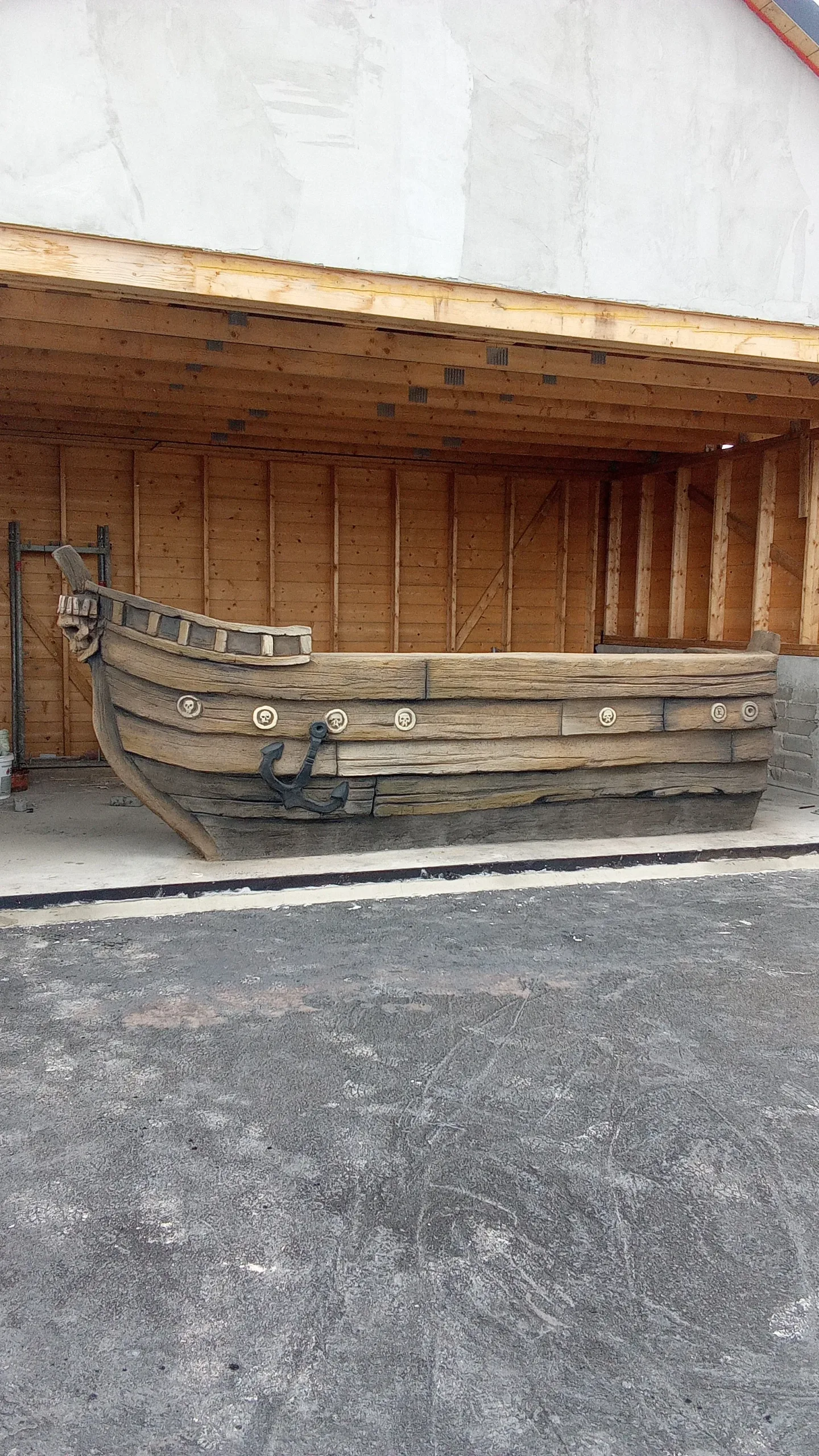
- approx. 6 kg/m²
- lightweight and rigid elements
- 1 piece or a production run
- from a model or mould
- water · moisture · UV
- resistance without impregnation
What elements
do we make from GRP?
We use GRP wherever a lightweight, rigid and moisture-resistant element of a specific shape is needed. The scope can cover a single piece or repeat production from a mould.
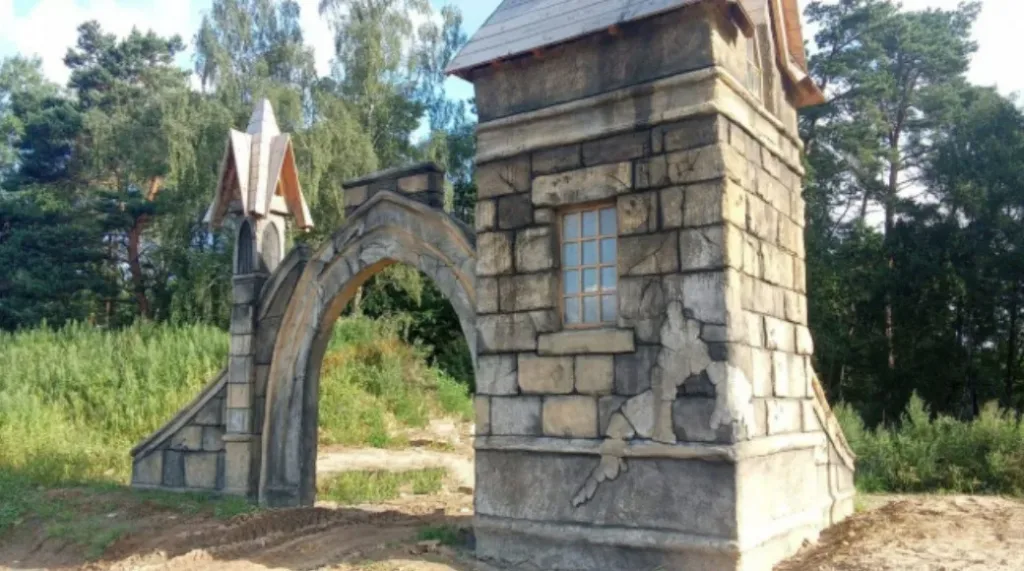
Decorations and scenery
Rocks, architectural elements, imitation materials and forms for interior designs, displays and film sets.
Three-dimensional decorations
Enclosures and covers
Elements adapted to the equipment's dimensions, place of use and access requirements – such as a rock enclosure for a fridge in a jungle bar.
Enclosure example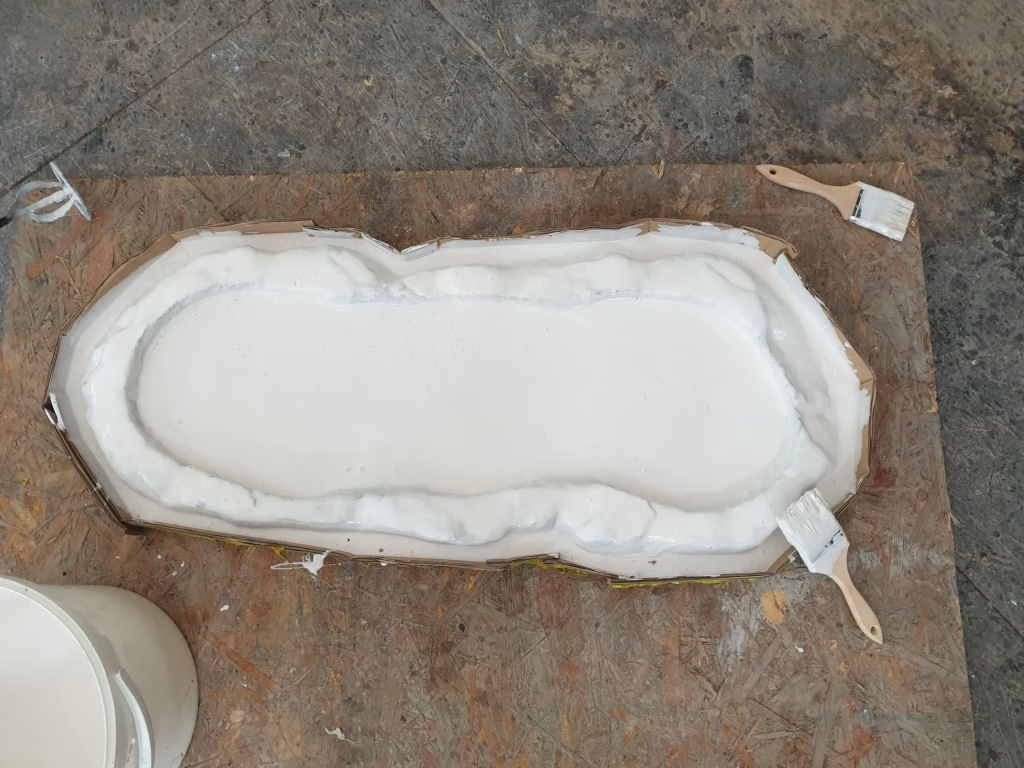
Bespoke elements and production runs
Products made from a model, drawing or dimensions, including short runs from a rigid mould.
Mould productionMaterial
GRP
in facts.
The main characteristics of the material we use for our elements. We agree the specifications of each product when preparing the quotation.
- Composition
- polyester resin reinforced with glass mat or fabric
- Weight
- approx. 6 kg/m² for decorative cladding
- Surface
- gelcoat, painting or handcrafted texture
- Resistance
- water, moisture, corrosion, UV radiation
- Thickness
- chosen to suit loads and use
- Shape
- any shape – reproduced from a model or mould
- Reinforcements
- ribs, inserts and fixings built into the GRP
- Repairs
- localised, without replacing the entire element
Projects
GRP in our
projects
Equipment enclosures, theatre decorations, plant forms and structures beside shops – all made from GRP (glass-reinforced plastic).
All projects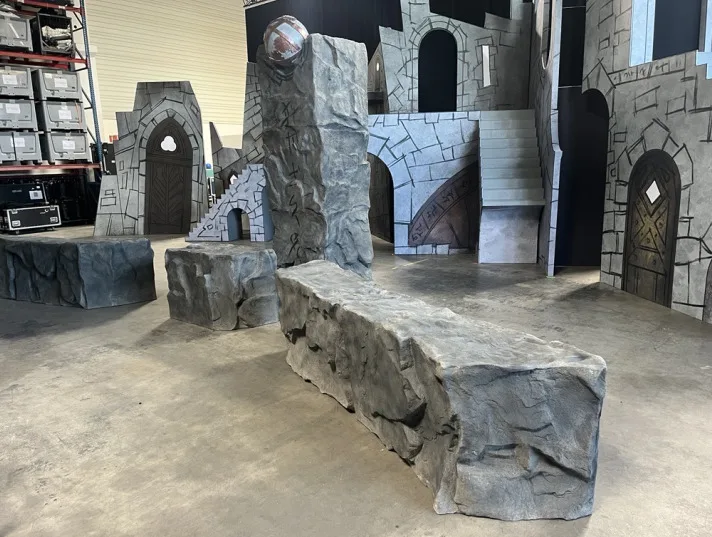
A StoneDeco project
Monolith, sphere and rock table tops for a theatre
A glass fibre monolith and sphere, and rock table tops, hand-painted to the set designer's plan.
- 1 week making a monolith
- Glass fibre monolith and sphere
- External design scenery concept
- Finished element delivery to the customer
A StoneDeco project
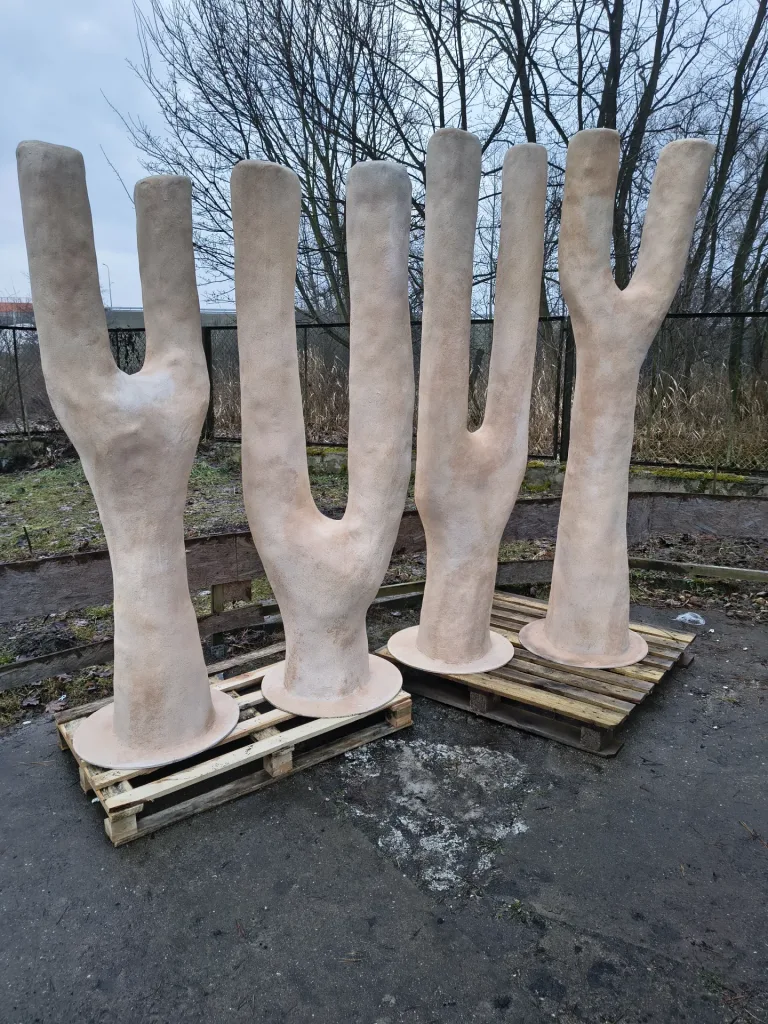
Decorative cacti for a clothing shop
Cacti 2.5–3 m tall, made to the client's design.
Explore the project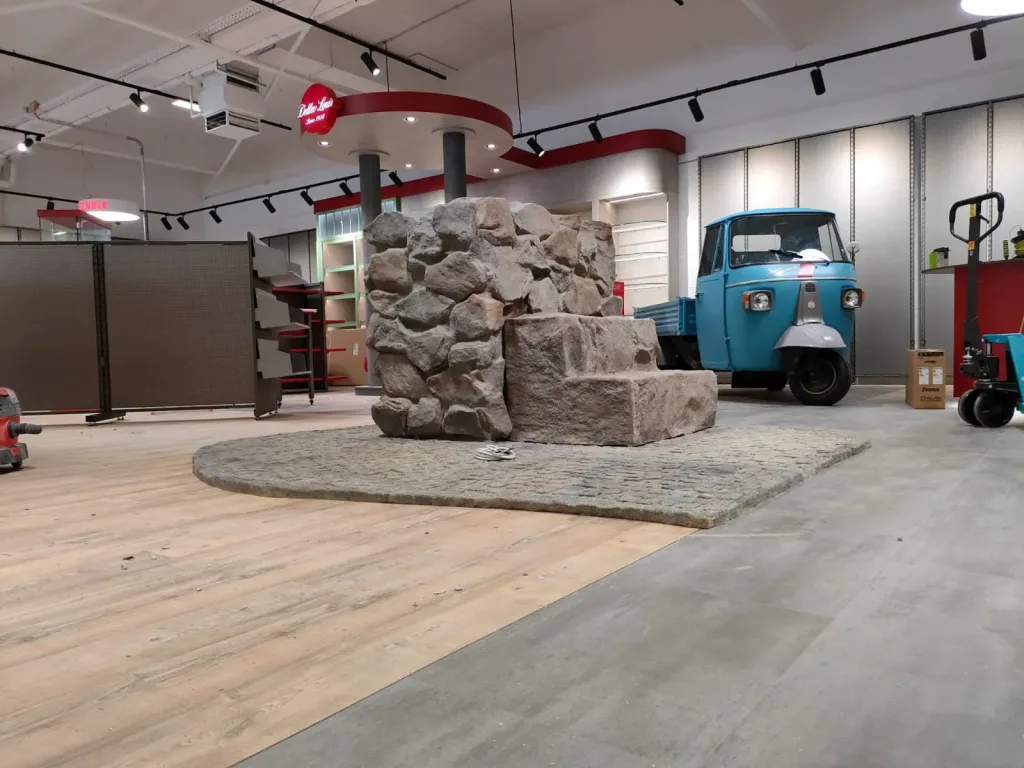
A StoneDeco project
Rock structure beside a shop in Flensburg
Trolley shelter, rock bench and imitation paving.
Explore the project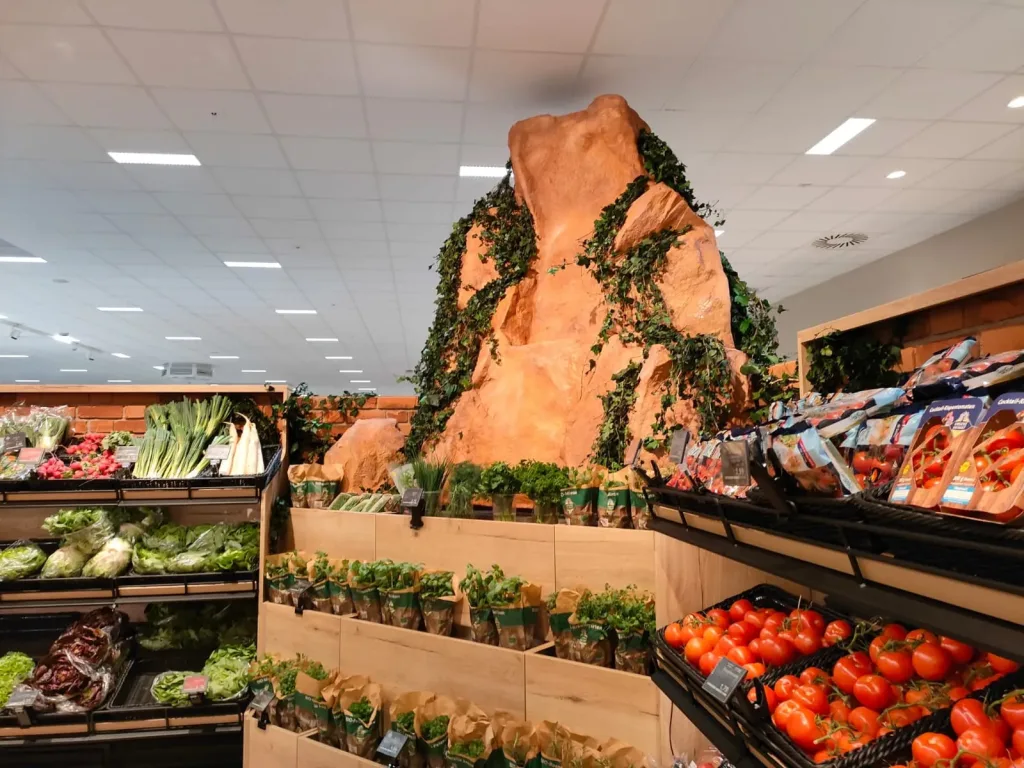
A StoneDeco project
Waterfall in an EDEKA supermarket
Rock waterfall, reservoir and equipment in this project.
Explore the projectA similar scope at your facility?
Let us discuss productionProduction
What we consider
during production?
We design a GRP element around its function: where it stands, what loads it bears and how it should look close up.
How we work in the workshopFunction and loads
We design a decoration viewed close up differently from a technical cover.
Reinforcements and fixings
We reinforce installation and load-bearing points during the laminating process.
Finish
Gelcoat, colour or texture – depending on the location and desired appearance.
Operating conditions
Moisture, temperature, UV and cleaning agents – materials selected to suit them.
Ordering step by step
How is
a GRP element made?
From drawing to finished element – with a model and mould if needed.
How we workDrawing or model
Dimensions, quantity, conditions of use and surface appearance.
Mould
We make a model and mould or use an existing mould.
Laminating
Layers of resin and glass fibre, reinforcements and fixings.
Finishing and delivery
Sanding, colour or texture, transport to the client.
For an element quotation
Drawing, model or photograph, dimensions, quantity, conditions of use and the desired surface appearance.
Why GRP?
- Lightness – a GRP element weighs many times less than its concrete or stone counterpart; our rocks weigh approx. 6 kg/m².
- Durability – glass fibre provides rigidity and impact resistance.
- Resistance to water and corrosion – GRP does not rust, rot or absorb water, making it suitable beside swimming pools and outdoors.
- Any shape – a mould can reproduce complex geometry and texture.
We describe the material's properties in greater detail in the article GRP – properties and applications.
GRP production step by step
- Model and mould – we make a master model and mould or use an existing mould. See mould production.
- Outer layer – a layer is applied inside the mould to form the finished surface (e.g. gelcoat).
- Laminating – successive layers of resin and glass fibre give the element its thickness and rigidity; where necessary, we build in reinforcements and fixings.
- Finish – trimming edges, sanding, painting or finishing the texture by hand.
Where do we use GRP?
- Artificial rocks, rock walls and grottoes for water parks, hotels and gardens.
- Equipment enclosures, technical covers and elements concealing infrastructure.
- Scenery elements, props and display stands – more: three-dimensional decorations.
- Decorative garden elements – cascades, ponds and stones also available as ready-made garden elements.
What should I prepare for a quotation?
- a drawing, model, photograph or description of the element,
- dimensions and quantity,
- conditions of use: loads, moisture, temperature, fixings,
- the desired colour and surface type,
- delivery date and location.
We repair damaged GRP products – more on the page GRP product repairs.
What is GRP (glass-reinforced plastic)?
It is a composite material made from polyester resin reinforced with glass fibre (mat or fabric). It is lightweight, rigid and resistant to water and corrosion, and its surface can be finished with gelcoat or painted by hand.
Do you make individual elements?
Yes. We quote for the quantity, preparation of the model and mould and production method for each specific order. For one-off pieces, we often laminate directly onto the model.
Can I commission an element to my own design?
Yes. We need overall dimensions, functional requirements (loads, moisture, temperature, fixings) and a surface description. You can also provide a sample or model for discussion.
Does production include the mould?
If a new mould is needed, we define its production as part of the scope. We assess whether an existing mould can be used after examining it.
How much does a GRP element cost?
Cost depends on size, shape, GRP thickness, surface finish, quantity and whether a model and mould need to be made. We prepare the quotation from a drawing, photograph or description with dimensions.
We will quote for the element
made from laminate
Dimensions, quantity, intended use and a drawing or photograph are enough. We will establish production possibilities and the scope of the quotation.
Send a finished design or simply an idea.
The initial conversation carries no obligation.