
GRP repairs
and decoration restoration
We repair cracks, missing sections and worn surfaces in GRP (glass-reinforced plastic) products: rock decorations, enclosures, architectural elements and scenery. We match the repaired area to the texture and colour of the whole.
Assessment from photographs · Repair on site or in the workshop
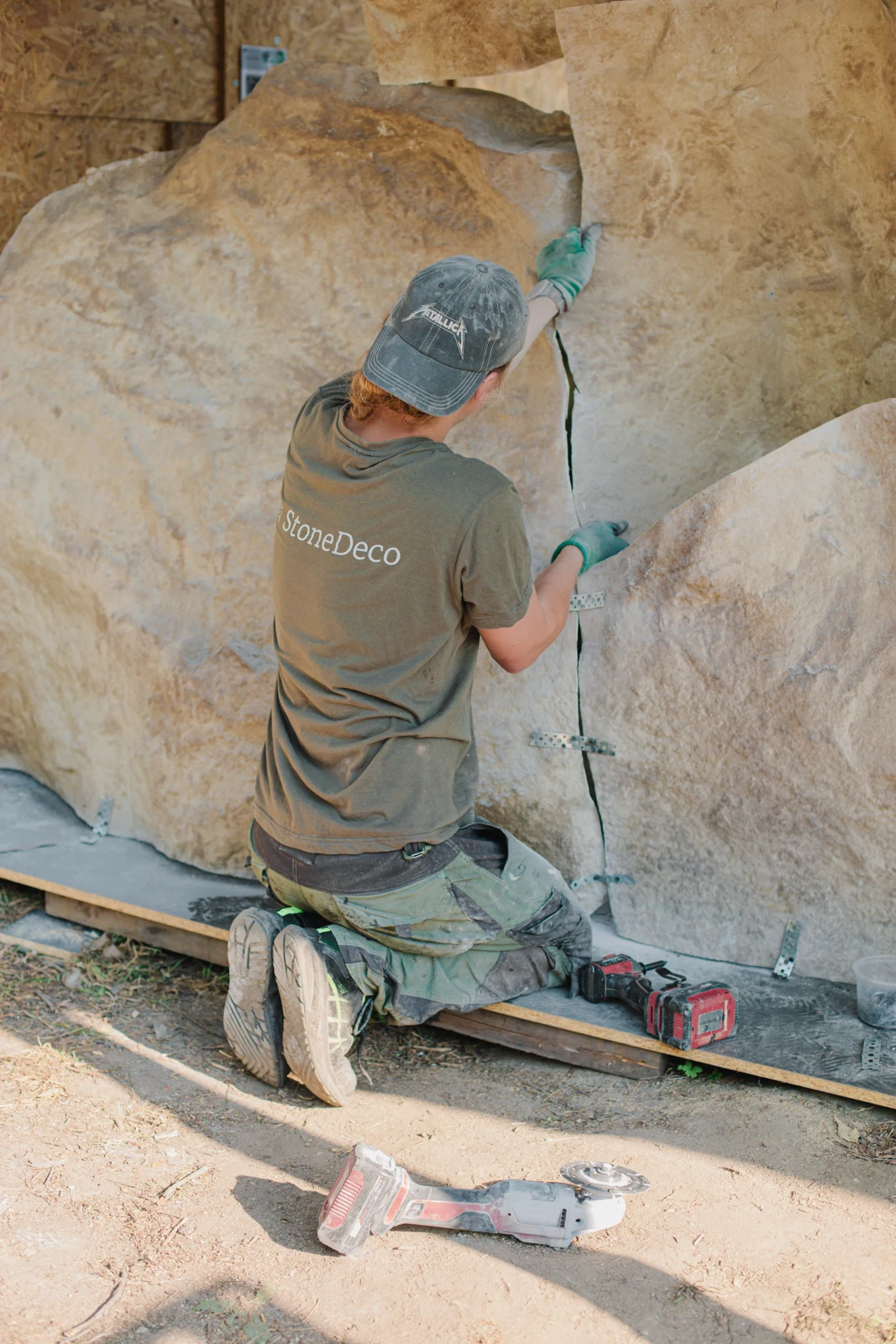
- assessment from photographs
- before anyone visits
- on site or in the workshop
- depending on overall dimensions
- other companies' decorations too
- GRP from other contractors
What work
do we make?
The repair method depends on the material, type of damage and the conditions in which the element operates. Photographs allow us to assess the scope before arranging an inspection or transport.
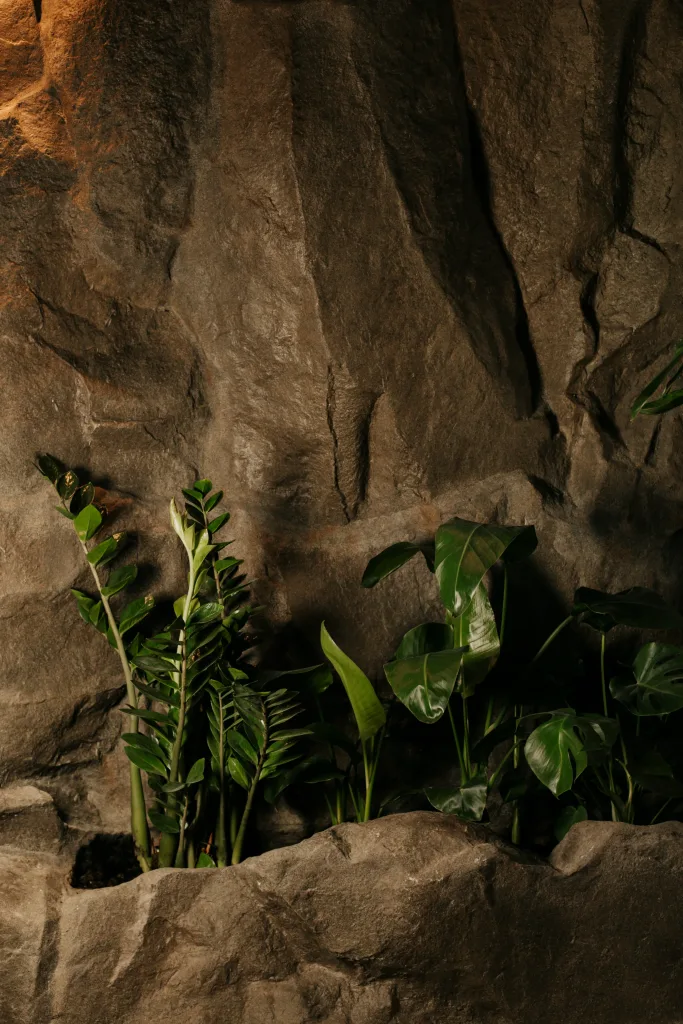
Cracks and missing sections
Damage assessment, surface preparation, rebuilding the GRP and reinforcing the repair area.
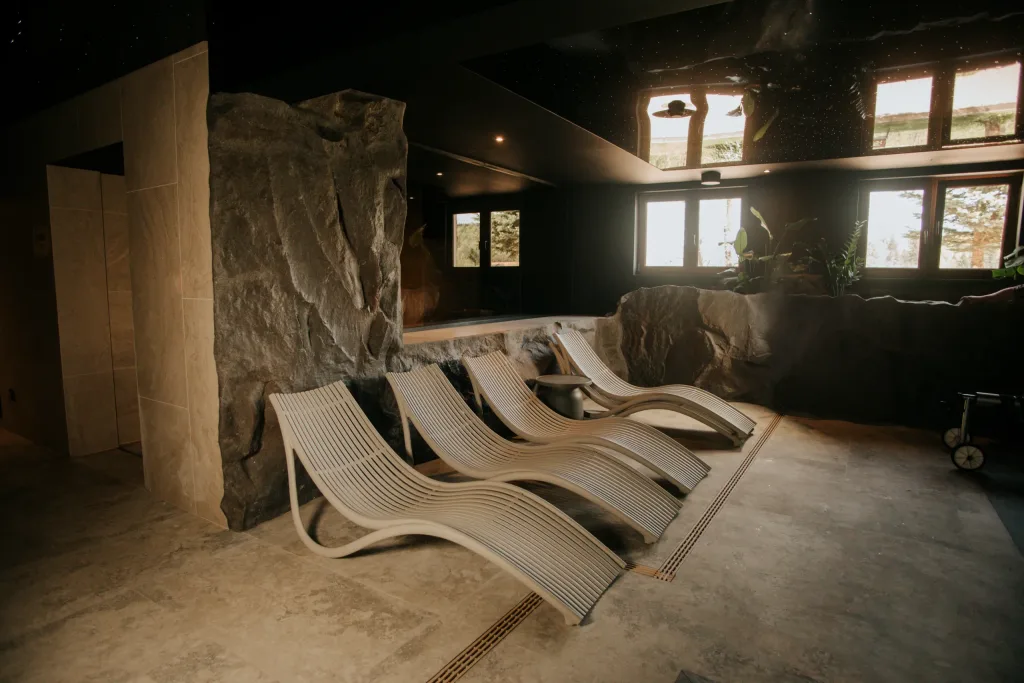
Surface restoration
Renewing a worn, faded or scratched layer and matching colour and texture.
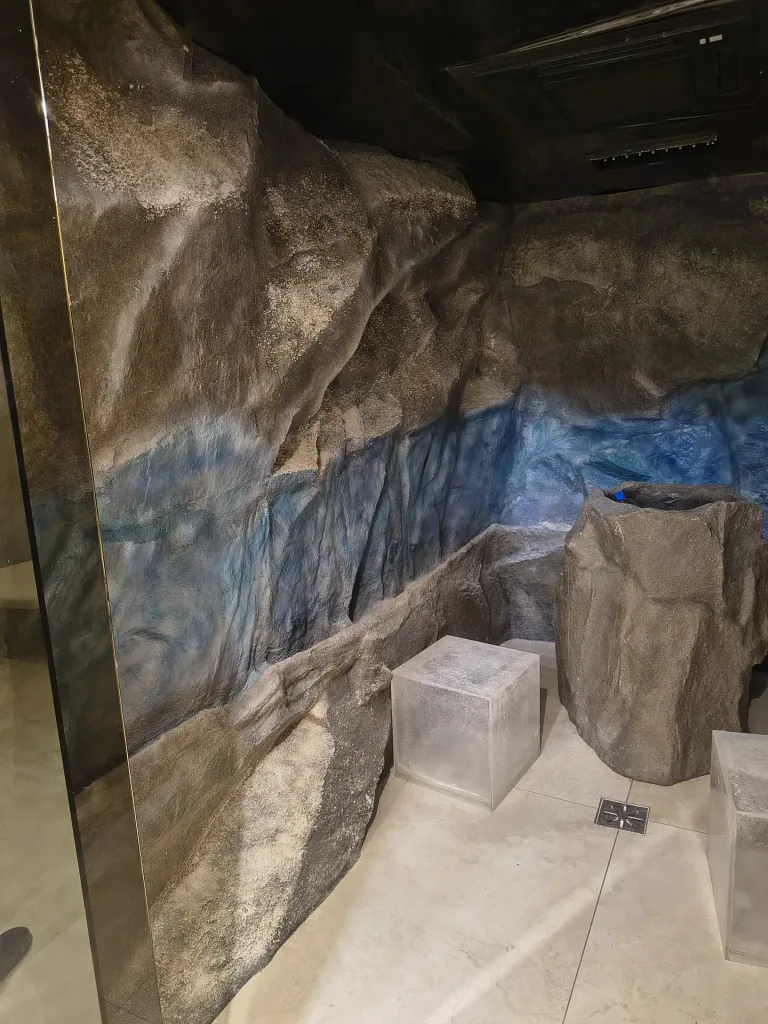
Refreshing decorations
Work on existing rocks, grottos and scenery – including those made by other companies.
Types of damage
What do we repair
and how?
Examples of damage and how we approach it. We agree the scope for each element after assessing photographs.
| Damage | What we do | Where we usually repair it |
|---|---|---|
| Hairline crack | sanding, a new GRP layer, finishing | on site |
| Missing section or chipped edge | rebuilding and recreating the texture | on site |
| Large crack or puncture | reinforcement from underneath and rebuilding | in the workshop or on site |
| Faded colour | washing and repainting in layers | on site |
| Transport damage | assessment, repair and retouching | in the workshop |
Production
What we consider
during a repair?
A good repair is durable and invisible – so we start with the cause of the damage.
How we work in the workshopCause
We establish what caused the damage so the problem does not recur.
Colour matching
We match the colour to the adjacent surface and the decoration's current condition.
Texture
We reproduce the rock or wood pattern in the repair area.
Safety
We give edges and surfaces touched by people a smooth, stable finish.
Ordering step by step
How does
a repair proceed?
We start with photographs – these often already indicate the scope and where we will carry out the work.
How we workPhotographs
Overall views and close-ups of the damage, dimensions and location.
Assessment and plan
Scope, repair location and timing.
Repair
Rebuilding the GRP and reinforcing the damaged area.
Finish
Texture and colour matched to the whole.
For a repair quotation
Photograph of the entire element, close-ups of the damage, dimensions, location and – if known – the cause of the damage.
The most common damage to GRP products
- Cracks – following impact, overloading or movement of the substrate.
- Missing sections and chips – on edges and in places frequently touched by people.
- Worn surface – faded colour, scratches and abrasion, especially outdoors and in pool areas.
- Damage during dismantling and transport – for example, exhibition and scenery decorations used repeatedly.
GRP repairs step by step
- Assessment – based on photographs, a description and, where needed, an inspection, we establish the scope and location of the repair.
- Preparation – cleaning and sanding the damaged area, removing loose material.
- Rebuilding – new layers of resin and glass fibre, with reinforcement from below if needed.
- Finish – reproducing the texture, sanding and painting to match the whole.
Repair on site or in the workshop?
We usually repair minor damage to decorations at facilities – water parks, hotels or gardens – on site. Elements that can be dismantled and require extensive work are often easier to bring to the Wołów workshop. We decide after assessing the overall dimensions and access.
Restoring older rock decorations
After years of use, GRP rocks and grottos may need their colour refreshed, especially in sunlight or heavily used areas. Restoration includes washing, repairing minor damage and repainting in layers – an effect close to a new decoration at significantly lower cost than replacement. We can also extend the decoration with new elements at the same time – more: Bespoke artificial rocks.
More about the material itself: GRP – properties and applications and bespoke GRP production.
Is sending photographs enough?
Photographs allow us to begin the assessment: please send an overall view of the element and close-ups of the damage. More complex damage may require additional information or an inspection.
What GRP products do you repair?
Primarily rock decorations, grottos, enclosures, architectural elements, moulds and scenery made from GRP (glass-reinforced plastic). We decide whether repairing a particular element is within our scope after seeing photographs and a description.
Do you repair decorations made by other companies?
Yes. We assess the existing product, including those needing their colour and texture refreshed. We confirm whether and how a repair is possible after establishing the material and condition of the element.
Does the damaged element need to be brought to the workshop?
Not always. We determine this based on overall dimensions, the scope of work, access and the possibility of safe transport. We often repair decorations at facilities on site.
Will the repaired area be visible?
We finish and paint the rebuilt area so that its texture and colour relate to the adjacent surface. With older, faded decorations, it is sometimes worth refreshing the colour of a larger section.
Please show us
element to be repaired
An overall photograph and a close-up of the damage, approximate dimensions and location are enough. Please describe what happened and what repair result is needed.
Send a finished design or simply an idea.
The initial conversation carries no obligation.