In hotels, water parks and campsites, children often decide where the family returns next year. A cave, jungle or Wild West area gives them an adventure and the venue photos parents share on social media. We explain planning using examples from our projects.
A theme children recognise
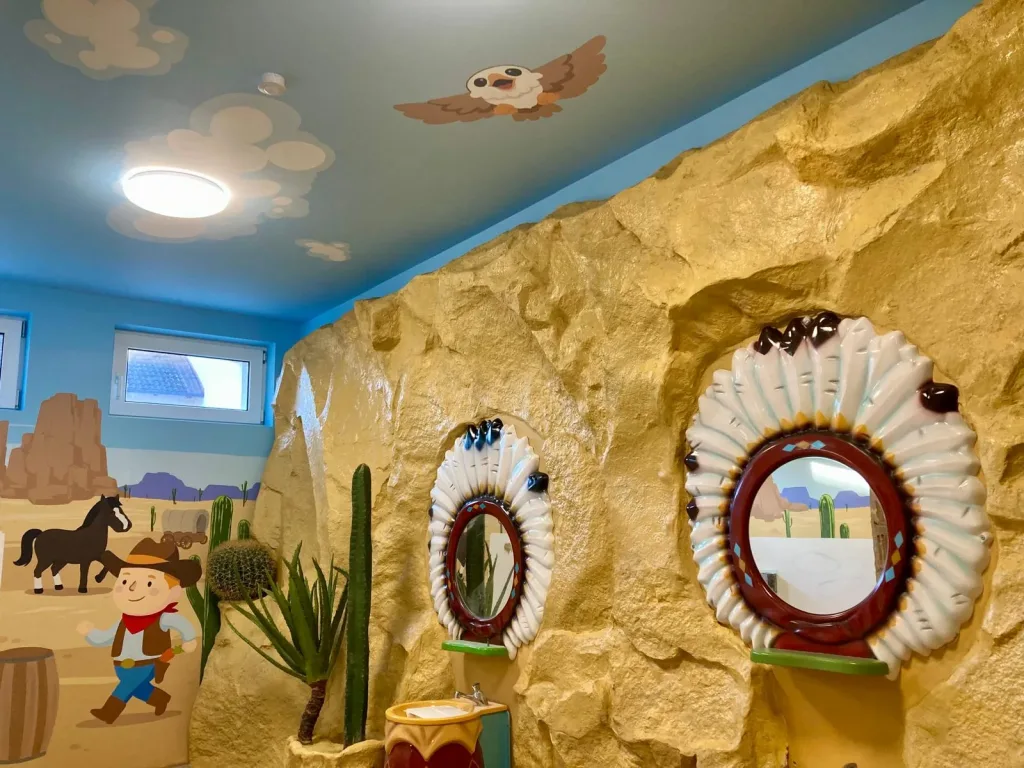
A good theme is recognisable in a second: cacti and a saloon mean the Wild West, vines and stone columns a jungle, a rock tunnel with a skull a cave adventure. Combine three-dimensional forms with a painted backdrop that completes the story. In the children’s bathroom at a campsite rock walls blend into a landscape mural, making the small interior seem larger.
Safety from the start
- Edges – within children’s reach, forms are gently modelled, without sharp projections at face height.
- Climbing – if a decoration is not for climbing, do not design steps or handholds that encourage it.
- Stability – every element is anchored to a wall, floor or structure.
- Cleaning – surfaces in wet and sanitary areas must withstand frequent washing.
- Venue requirements – safety rules and any fire requirements are agreed with management before production.
Small spaces, big effect
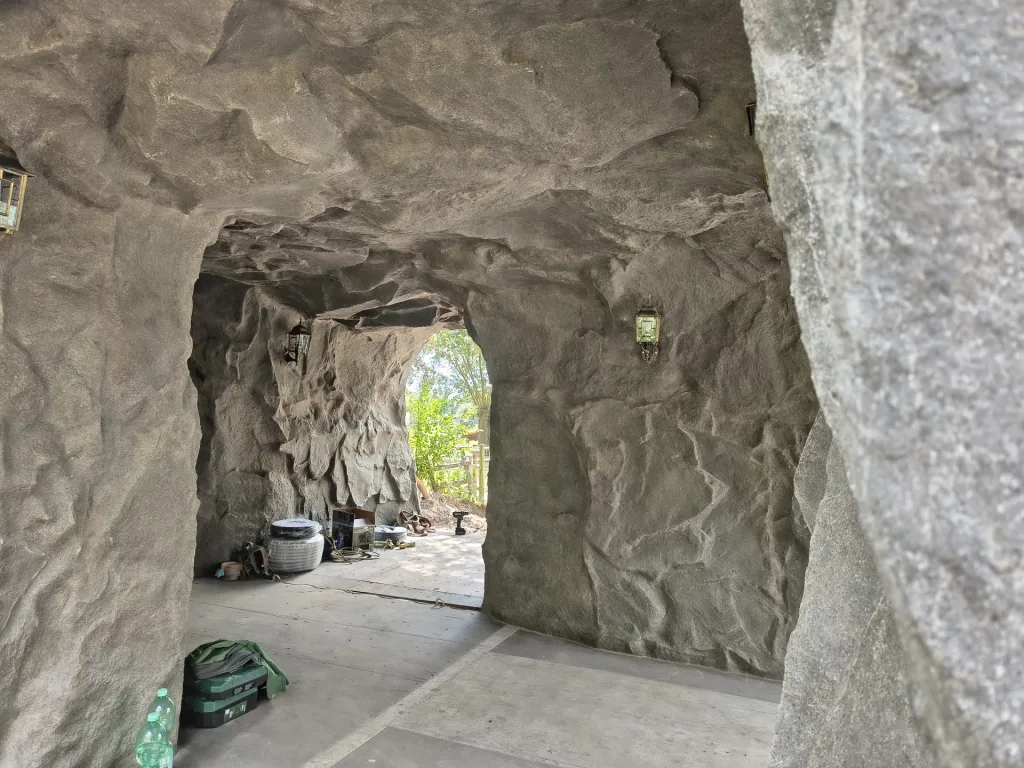
A children’s area does not need a separate building. A bathroom, pool corridor, kids-club entrance or passage to a paddling pool can become an attraction. In water park in Germany an ordinary passage to the children’s area became a cave with a sculpted skull. At Suntago the jungle theme leads guests to Jungle Quest.
How does a project proceed?
- Discussion of the location, theme and children’s age group.
- Concept: sketch or visualisation, selection of shapes and colours.
- Workshop production: rocks, sculptures, GRP elements and painted backdrops.
- Installation in a short window, often out of season or at night.
Prefabrication keeps closure short because most work happens in the workshop. Read more about planning a theme on the page themed spaces, and about working in an operating venue in the installation checklist.