
GRP is strong, but a heavy impact, installation stresses or years of sunlight can damage it. The good news is that most defects can be repaired locally without replacing the whole element. We repair GRP rock decorations, enclosures and scenery, so here is how it works in practice.
What damage can GRP suffer?
- Gelcoat scratches and chips – only the outer coloured layer is damaged; the GRP underneath remains intact.
- Spider cracks – a network of fine gelcoat cracks, usually where the element was struck or bent.
- GRP crack – a split passes through the mat layers and the element loses stiffness at that point.
- Missing section or puncture – a piece of material is absent, for example after impact or a fixing being torn off.
- Delamination – GRP layers separate; tapping produces a dull sound.
- Dulling and chalking – the result of years of UV exposure on an unprotected surface.
How can you tell whether damage is only superficial?
Inspect both sides if possible and gently tap around the damage. A hard, clear sound usually indicates sound GRP; a dull one suggests delamination. If the element bends at the crack or the split is visible underneath, the GRP itself is damaged, not just the gelcoat. For venue decorations and enclosures, we also accept photographs for an initial assessment of repair scope.
Repairing a gelcoat chip step by step
- Clean and degrease the area and remove loose fragments.
- Slightly widen and abrade the edges of the defect with sandpaper.
- Apply gelcoat or filler in a matching colour, slightly proud of the surface.
- Once cured, wet-sand with progressively finer paper, then polish or paint.
Repairing GRP cracks and missing sections
- Expose sound GRP: widen and sand the crack, tapering edges to support the new layers.
- Thoroughly remove dust and degrease the surface.
- Apply layers of glass mat saturated with resin, each overlapping further onto sound material. Support larger missing sections underneath.
- After curing, level the surface with filler and sand it.
- Restore the top layer: gelcoat, paint or, for decorations, texture and colour.
Rock decorations – repairing the texture too
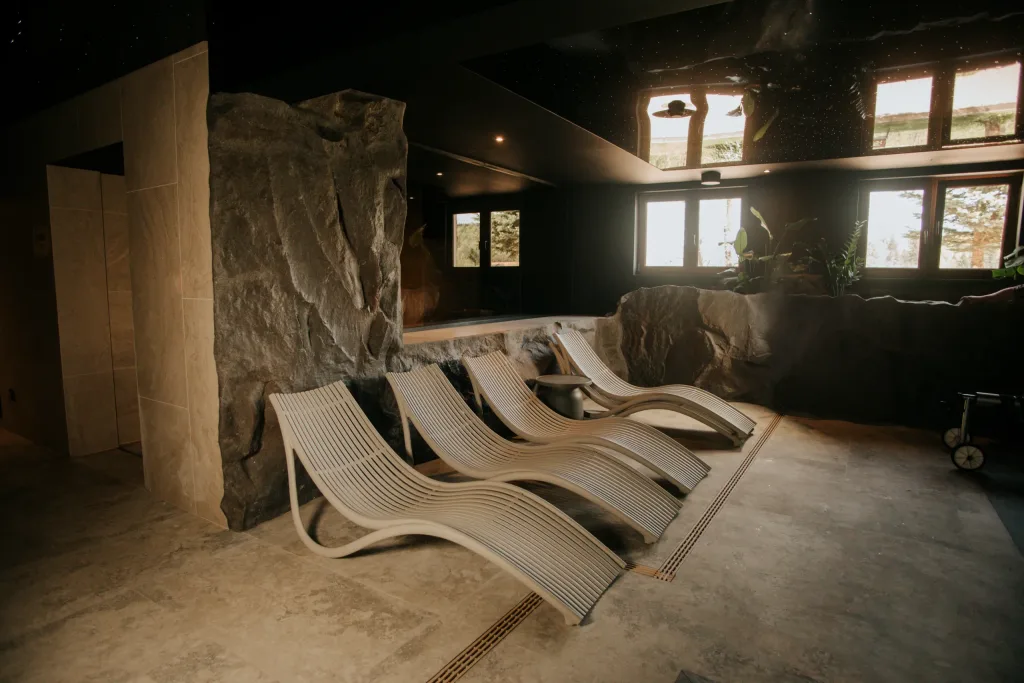
For artificial rocks and scenery, strength alone is not enough: the repair must look like the surrounding surface. We restore texture by hand-modelling or mould impressions, then apply several colour layers as with a new decoration. Many such repairs are done on site without dismantling elements.
When can you repair it yourself, and when should you use a workshop?
Small gelcoat chips can be filled yourself in a ventilated area with gloves and a mask: resins contain styrene and other volatile components. Cracks through the GRP, load-bearing elements, guest-accessible decorations and surfaces viewed close up are better left to a workshop. We describe the scope on the page GRP repair and refurbishment, and the material itself in the guide GRP – properties and applications.
