Anyone planning artificial rocks for a water park, hotel, zoo or garden soon encounters two main technologies: GRP (glass-reinforced plastic) cast in moulds and sprayed concrete built directly at the venue. Both look realistic but differ in working method, weight and schedule. We explain the differences to help choose a solution for the location.
How are GRP rocks made?
GRP is the technique we use at StoneDeco. First, a silicone mould reproduces real rock texture. We lay resin-saturated glass fibre inside it and remove the finished element after curing. Texture is refined by hand and colour applied in layers.
- Weight: approx. 6 kg/m² – rocks can be fitted to walls and ceilings, in existing buildings and even on a ship.
- Prefabrication: most work happens in the workshop. At the venue, we only install, join and conceal the interfaces.
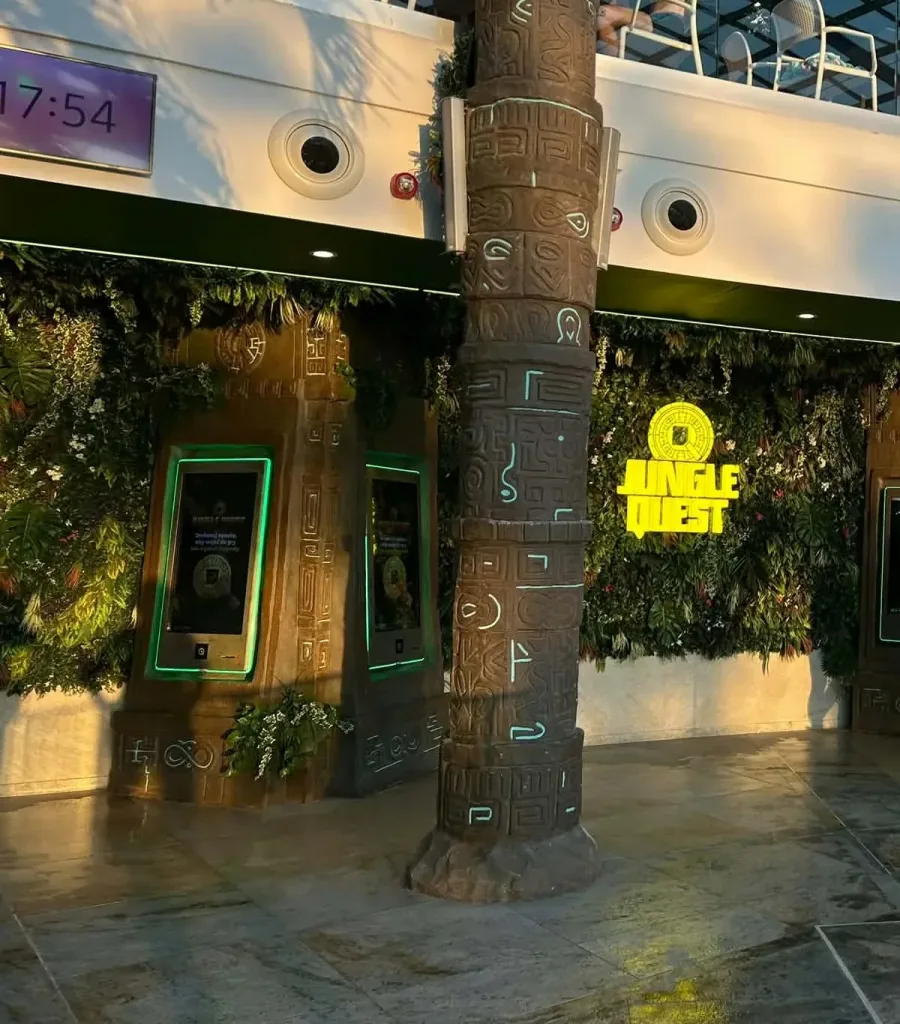
- Time at the venue: short. We prepared the Jungle Quest scenery at Suntago for around 4 weeks in the workshop; work in the water park took 5 working days.
- Transport: light elements are easy to transport, including abroad, such as the AIDAvita decorations in Palermo harbour.
How are sprayed-concrete rocks made?
A steel structure is built on site, covered with mesh, sprayed with mortar and sculpted before it hardens. The result is a very solid, monolithic rock.
- Weight: heavy – the structure and substrate must carry substantial loads.
- On-site work: everything is made at the venue, involving longer work, dust and moisture in the construction area.
- Scale: suited to very large freestanding formations built from scratch, for example in new enclosures.
Practical comparison
An existing venue that needs to reopen quickly – hotel, water park or shop – usually benefits from prefabrication. We installed an 80 m² rock display in a Paris shop in two nights and the Istebna snow grotto in one evening.
Limited load capacity – a floor, mezzanine, ship or lightweight partition – favours GRP.
A very large new outdoor formation, where weight is not a problem and time permits, is a typical application for sprayed concrete.
Durability and use
Both materials tolerate water and outdoor conditions when correctly made and finished. GRP is waterproof and UV-protected, and easy to repair or recolour. We also repair and refurbish GRP decorations.
GRP is a plastic, so fire-safety requirements must be considered at design stage. We agree requirements and necessary material documentation with the designer and client.
How to choose
Start with three questions: the site’s load capacity, the permitted closure and the rock’s intended size. Send plans, photographs and a schedule, and we will explain whether and how GRP suits your venue.